






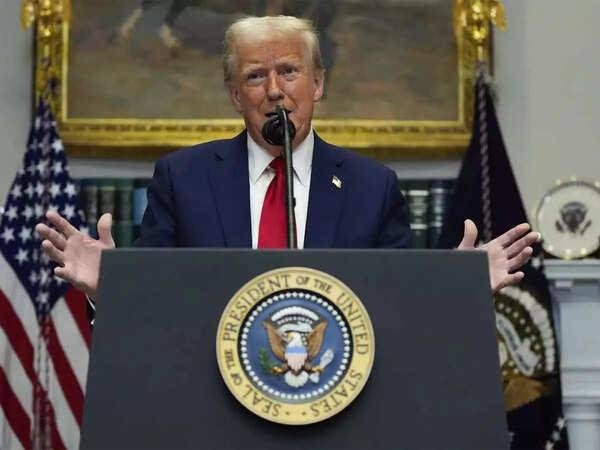
In a significant geopolitical development, Donald Trump has announced a 10-day ceasefire between Israel and Lebanon, calling it a crucial step toward stability in the Middle East.
The announcement followed what Trump described as “excellent conversations” with Joseph Aoun and Benjamin Netanyahu, signaling renewed diplomatic momentum in a region long defined by conflict.
According to Trump, the Israel–Lebanon ceasefire officially began at 5 P.M. EST, with both sides agreeing to temporarily halt hostilities to create space for peace negotiations.
A Push Toward Israel–Lebanon Peace Talks
Beyond the ceasefire, Trump revealed plans for direct peace talks between Israel and Lebanon — something rarely seen since 1983.
Officials from both countries reportedly met earlier this week in Washington, D.C., alongside Marco Rubio. The meeting marked a rare diplomatic breakthrough and raised hopes for long-term resolution.
Trump stated:
“It has been my honor to solve 9 wars across the world, and this will be my 10th — so let’s get it done.”
This statement positions the move as part of a broader US-led peace initiative in the Middle East.
US Leadership Driving Middle East Negotiations
The United States appears to be taking a central role in facilitating dialogue. Trump confirmed that Vice President JD Vance, Secretary Rubio, and senior military officials are actively working on advancing negotiations.
With both nations signaling cautious willingness, experts suggest the Israel–Lebanon conflict resolution process could gain traction — if stability holds.
Ground Reality: Ceasefire Amid Ongoing Tensions
Despite the ceasefire announcement, the Israel–Lebanon border situation remains tense.
Benjamin Netanyahu clarified that operations targeting Hezbollah are not included in the ceasefire agreement, and Israeli forces have reportedly continued strikes in parts of Lebanon.
Reports also indicate Israeli troop movements deeper into southern Lebanon, aiming to establish a security zone of 8–10 kilometers — a move that adds complexity to the fragile truce.
Meanwhile, diplomatic friction persists. Joseph Aoun reportedly declined direct communication with Netanyahu, highlighting ongoing mistrust between the two sides.
Lebanon’s Position and the Hezbollah Challenge
Lebanon has maintained a cautious and strategic stance, emphasizing national sovereignty and resistance to external pressure, particularly regarding Hezbollah’s disarmament.
The United States has acknowledged Lebanon’s concerns, even as it continues pushing for a comprehensive Middle East peace deal that addresses both Israeli security and Lebanese autonomy.