







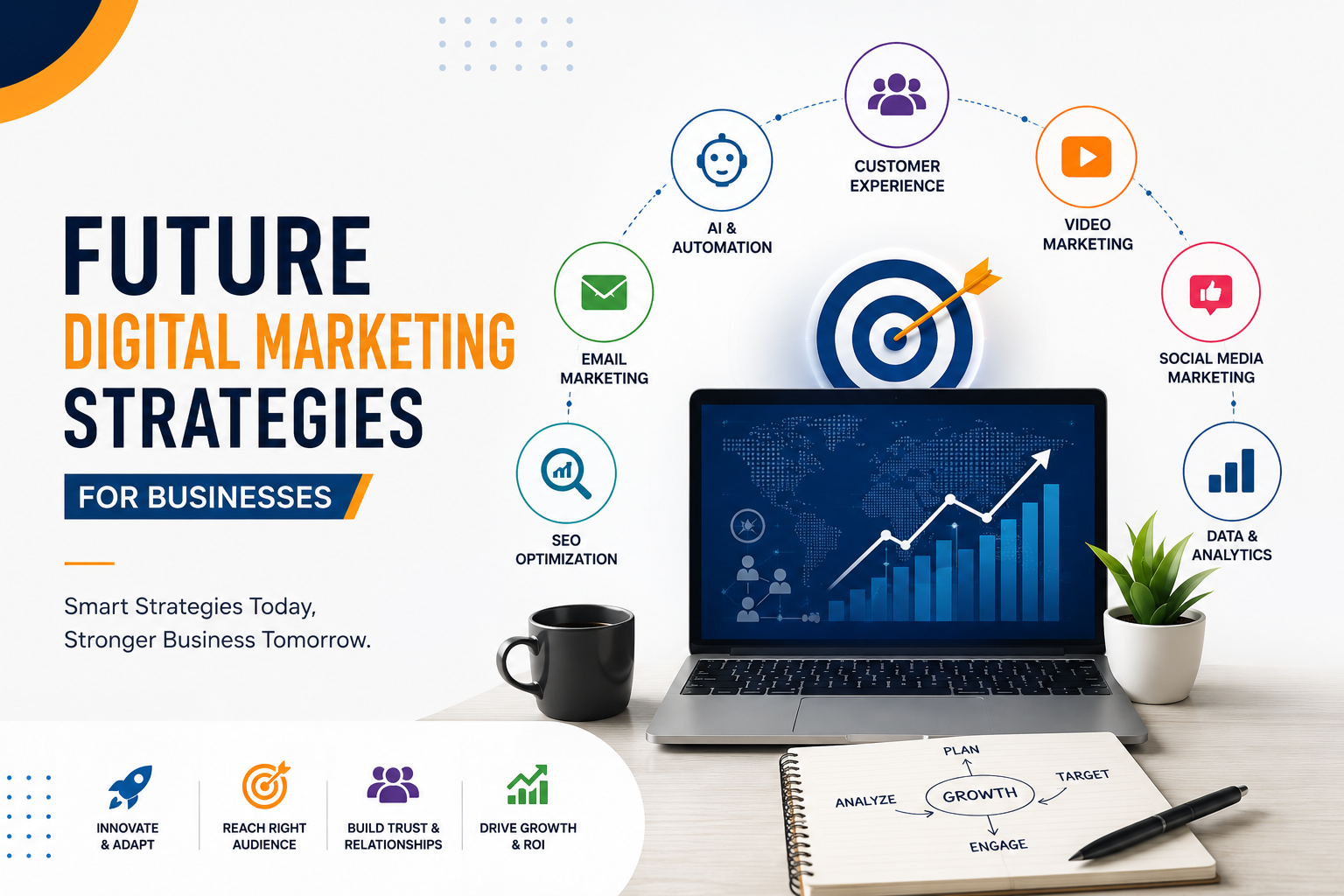
Future Digital Marketing Strategies for BusinessesDigital marketing has become one of the important parts of modern business. Whether a company is a local business, a growing startup or a large international brand having a strong online presence is no longer optional. Customers increasingly use search engines, social media, websites, online reviews, email, videos and other digital channels to discover products and services compare options and make purchasing decisions.
However digital marketing is changing faster than ever. New technologies, intelligence, changing consumer behavior, privacy regulations, automation, voice search, short-form video and new search experiences are transforming the way businesses communicate with their audiences.
The future of marketing will not simply be about publishing more content or running more advertisements. It will be about **using technology intelligently while creating trustworthy, personalized and human-centered experiences**.
Businesses that understand these changes early can build relationships with customers improve their marketing performance reduce wasted spending and create sustainable growth. On the hand companies that continue using outdated marketing strategies may find it increasingly difficult to attract attention and compete online.
In this article we will explore the future of marketing why it is important its major benefits, the challenges businesses need to prepare for and the key strategies companies should consider for long-term success.
Why Is the Future of Digital Marketing Important?
The future of marketing matters because customer behavior is constantly evolving. People are spending time online but their expectations are also becoming higher.
Customers no longer want to see advertisements everywhere they go. They expect businesses to understand their needs provide information respond quickly protect their personal information and offer a smooth experience across different channels.
For businesses this means digital marketing is moving from promotion toward a more complete customer experience.
1. Customers Are Becoming More Digital
Consumers now research products and services online before making purchasing decisions. They may discover a business through Google see a video on media read reviews visit a website and then contact the company through WhatsApp, email or another communication channel.
This means businesses need to be present across the journey rather than depending on a single marketing channel.
A company with a digital strategy can interact with potential customers at multiple stages:
- When they first discover a problem
- When they search for information
- When they compare solutions
- When they are ready to buy
- After they become customers
The future of marketing will therefore focus heavily on creating connected customer journeys.
2. Competition Is Increasing
The internet has made it possible for businesses of any size to reach customers beyond their local area. While this creates opportunities it also increases competition.
A small business may now compete with established brands, online marketplaces, influencers and international companies.
Businesses need more than a website to stand out. They need a brand identity, valuable content, strong search visibility engaging social media, excellent customer service and a strategy for building trust.
3. Technology Is Changing Marketing
Artificial intelligence and automation are already changing how marketers conduct research analyze data create content personalize communication and manage campaigns.
Technology can help marketers work faster. The most successful businesses will not simply use technology for the sake of using it. They will combine technology with creativity, strategy, human judgment and a deep understanding of customers.
Key Digital Marketing Trends Shaping the Future
The future of marketing will be influenced by several important trends. Businesses should understand these trends. Determine which ones are relevant to their audience and goals.
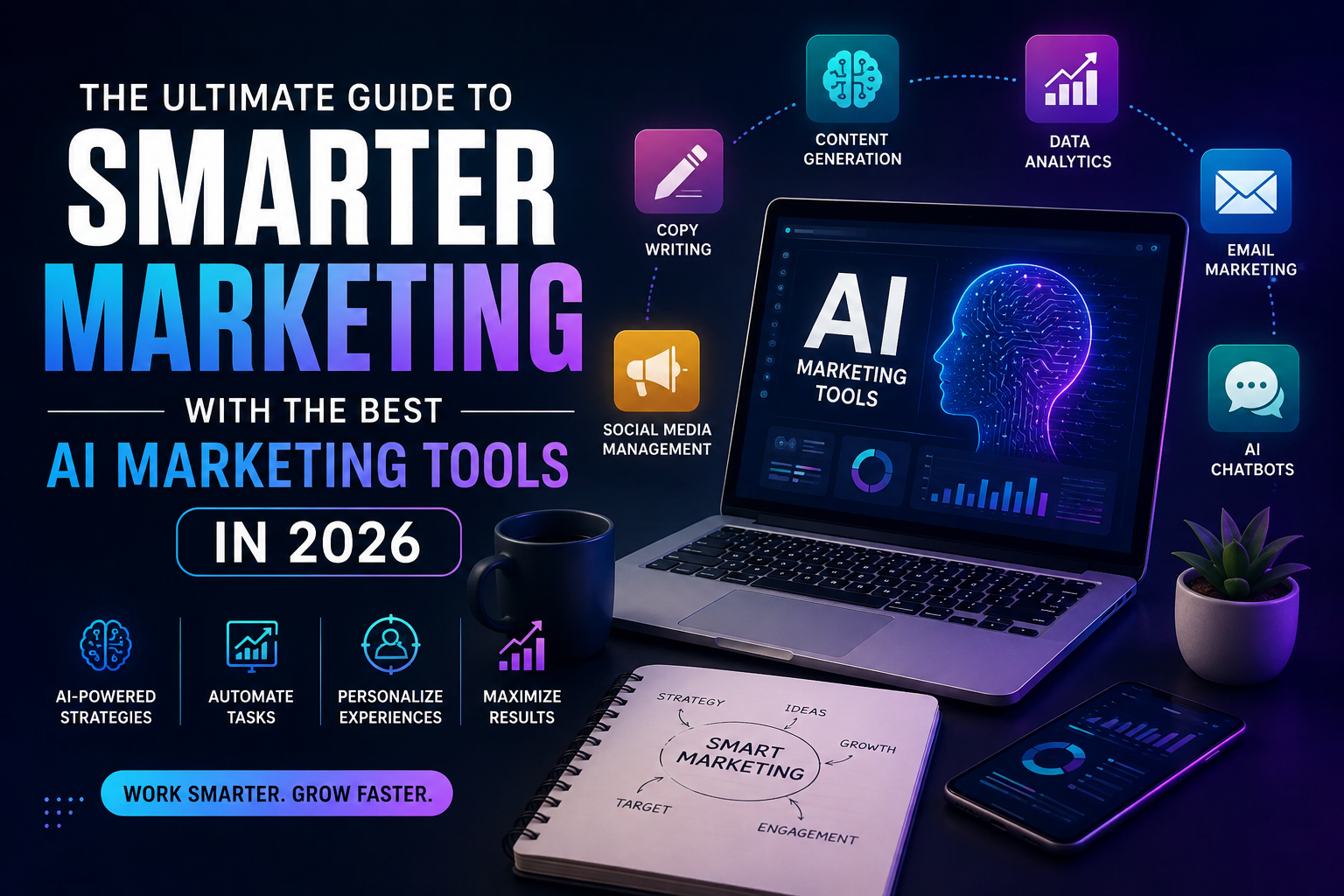
1. Artificial Intelligence Will Become a Core Marketing Tool
Artificial intelligence is one of the changes happening in digital marketing.
AI can assist marketers with tasks such as:
- Content ideation
- Keyword research
- Customer segmentation
- Data analysis
- Campaign optimization
- . Customer support
- Personalization
- Predictive analytics
- Content creation
- Marketing automation
AI can help businesses process amounts of information and identify patterns that may be difficult to find manually.
However businesses should avoid treating AI as a replacement for human marketers.
AI-generated content can be useful but human expertise is still essential for understanding customers developing original ideas checking accuracy maintaining brand voice and creating authentic communication.
The future will likely belong to businesses that use AI as a *marketing assistant rather than a substitute for strategy and creativity**.
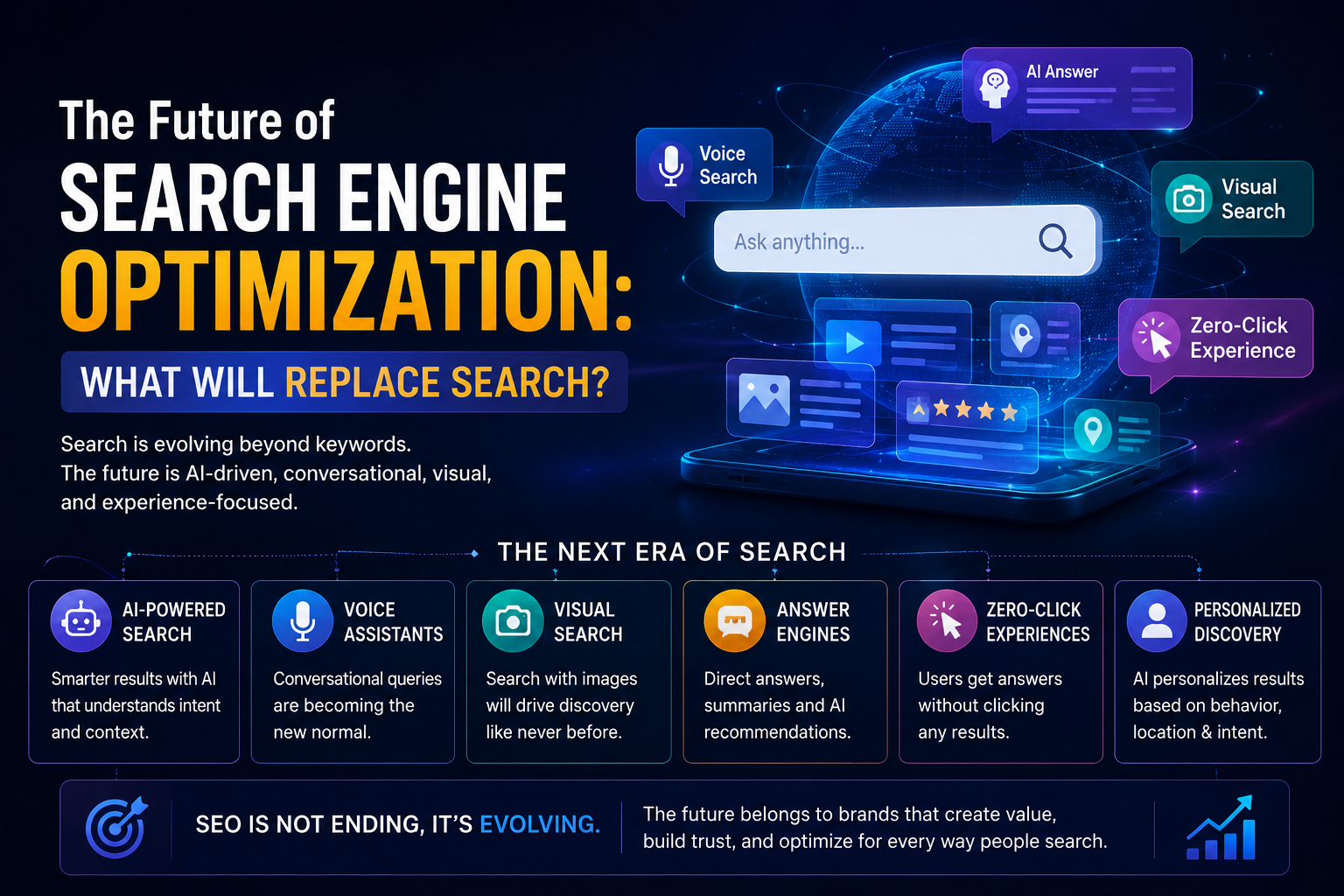
2. Search Is Evolving
Search engine optimization has traditionally focused on helping websites appear in search engine results. That remains important. The search experience is changing.
People increasingly expect answers rather than having to visit multiple websites. Search experiences are becoming more conversational and increasingly influenced by AI.
This means businesses need to focus on creating content that clearly answers customer questions.
Of writing content only to target keywords businesses should create comprehensive resources that demonstrate:
- Experience
- Expertise
- Trustworthiness
- Relevance
- Original information
- Clear answers to customer questions
SEO will increasingly be about becoming a *trusted source of information** not simply achieving a high ranking for a particular keyword.
3. Personalized Marketing Will Become More Important
Customers receive thousands of marketing messages every day. Generic communication is therefore becoming less effective.
Personalization allows businesses to provide content, offers, recommendations and messages that’re more relevant to individual customers or customer segments.
For example an online store might recommend products based on browsing behavior. An email campaign might send messages to new customers and existing customers.
However personalization must be balanced with privacy.
Customers want experiences but they also want businesses to respect how their data is collected and used.
The future of personalization will therefore require businesses to be both ** responsible**.
4. Video Content Will Continue to Grow
Video has become one of the effective ways for businesses to communicate online.
Short-form videos, videos product demonstrations, tutorials, interviews, behind-the-scenes content and customer testimonials can help businesses attract attention and explain their value quickly.
Video is particularly useful because it can communicate information through visuals, audio, storytelling and emotion.
Businesses do not necessarily need production equipment. Authentic and useful content can often perform better than polished advertising.
For example a local service business could create videos explaining common customer problems and how to solve them.
The key is not simply creating videos. It is creating **videos that provide value**.
5. Social Media Will Become Community-Focused
Social media marketing is also changing.
In the past many businesses focused heavily on follower counts and promotional posts. Today, engagement, trust, community and meaningful conversations are increasingly important.
People often trust recommendations, reviews, creators and real customer experiences more than advertisements.
Businesses can therefore use media to:
- Educate customers
- Answer questions
- Share customer stories
- Demonstrate expertise
- Build communities
- Collect feedback
Humanize the brand
The future of media marketing will be less about constantly saying “buy this” and more about giving people a reason to follow, trust and remember the brand.
Benefits of Future-Ready Digital Marketing
Preparing for the future of digital marketing can provide significant benefits for businesses.
1. Better Customer Engagement
Modern digital marketing gives businesses ways to communicate with customers.
A company can interact through websites, social media, email, messaging platforms, video, search and other digital channels.
This makes it easier to provide information and respond to customers throughout their journey.
Better engagement can lead to relationships and improved customer loyalty.
2. Greater Personalization
Technology allows businesses to divide their audiences into segments based on interests, behaviors, demographics and interactions.
This can help marketers deliver relevant messages.
Of sending one advertisement to everyone a business can develop campaigns for specific customer groups.
Relevant marketing can improve engagement and reduce wasted marketing spend.
3. Improved Marketing Efficiency
Automation and AI can reduce the amount of time marketers spend on tasks.
For example automated systems can help with:
- Email sequences
- Lead nurturing
- Customer segmentation
- Reporting
- Campaign monitoring
- Appointment reminders
- Customer support
This allows marketing teams to spend time on strategy and creative work.
4. Better Data-Driven Decisions
Digital marketing provides businesses with information.
Companies can analyze metrics such as:
- Website traffic
- Conversion rates
- Cost per lead
- Customer acquisition cost
- Engagement
- Email performance
- Advertising results
- Customer retention
These insights can help businesses understand what is working and where improvements are needed.
Of making decisions entirely based on assumptions companies can use data to guide their strategies.
5. Increased Reach
Digital marketing allows businesses to reach audiences beyond geographic boundaries.
A local business can attract customers in its city while an online business can potentially reach customers around the world.
This scalability makes digital marketing particularly valuable for startups and small businesses.
6. Stronger Brand Awareness
Consistent digital marketing can help businesses remain visible, to customers.
Useful content, social media activity, videos, search visibility, email marketing and online advertising can all contribute to brand recognition.
Over time customers might get to know the brand and are more likely to think of it when they need a certain product or service.
Challenges Businesses Need to Prepare For
Even though the future of marketing brings many chances it also brings big problems.
1. Fast Changes in Technology
Marketing technology changes fast.
A platform, an ad style, an algorithm or a tool that is popular now might change a lot in the future.
Businesses therefore must stay ready to change.
Of making their whole plan around one platform companies should build solid basics such as:
- A good website
- Relationships with customers
- Useful content
- First-party customer data
- branding
- High-quality products and services
These things are more lasting than depending completely on one platform.
2. Competition
More companies are putting money into digital marketing, which makes it harder to get attention.
Writing content is not enough anymore.
Businesses need to make content that’s really helpful, new and connected to the audience.
Understanding the people you want to reach is becoming more important.
3. Privacy and Data Protection
Privacy is becoming a worry for people and companies.
Companies need to know the privacy rules and make sure customer information is handled properly.
Building trust is very important because people might not want to deal with businesses that don’t care about data.
4. Much Content
The internet has a huge amount of content.
Millions of articles videos, social media posts, ads and other things all try to get attention.
This is a problem for businesses.
The answer is not just making content. Instead companies should focus on making content.
Original research, step-by-step guides, expert ideas, real stories, useful videos and things that really help can help a brand stand out.
5. Being Real
As AI content is easier to make people might not trust messages anymore.
Businesses need to keep a voice.
Real experiences, stories from employees, customer reviews, expert opinions and new ideas can make content more real.
Technology can help make content. Real life gives it meaning.
How Businesses Can Prepare for the Future of Digital Marketing?
Businesses don’t need to jump on every new trend. They should build a plan that can change and last.
1. Know Your Target Audience
Before using tools or ads know your customers.
Ask:
- Who are they?
- What problems do they have?
- What do they look for?
- What stops them from buying?
- Which places do they use?
- What kind of content do they trust?
A clear idea of your audience should be the start of every marketing plan.
2. Make a Strong Website
Your website is one of your important digital tools.
It should be:
- Easy to use on phones
- Fast
- Simple to use
- Safe
- Easy for search engines
- Easy to understand
- Focused on getting people to act
Businesses should also make sure people can quickly see what the company offers and what to do next.
3. Make Good Content
Content marketing will stay important.
Of making content just to post every day businesses should answer real customer questions.
A smart content plan might include:
- Blog posts
- Guides
- Examples of success
- Videos
- questions
- Charts
- Podcasts
- Lessons
- Stories from customers
The goal is to be a source in your area.
4. Use AI with Care
Businesses should try AI tools to make work easier.
Every AI content should be checked by people who know the topic and the brand.
AI can help with research, ideas, analysis, personalization and work tasks. People should still handle quality and big choices.
5. Use Channels
Businesses should not rely on just one place.
For example a company that only uses one media site could have big problems if the site changes how it works.
A better way is to use methods, like:
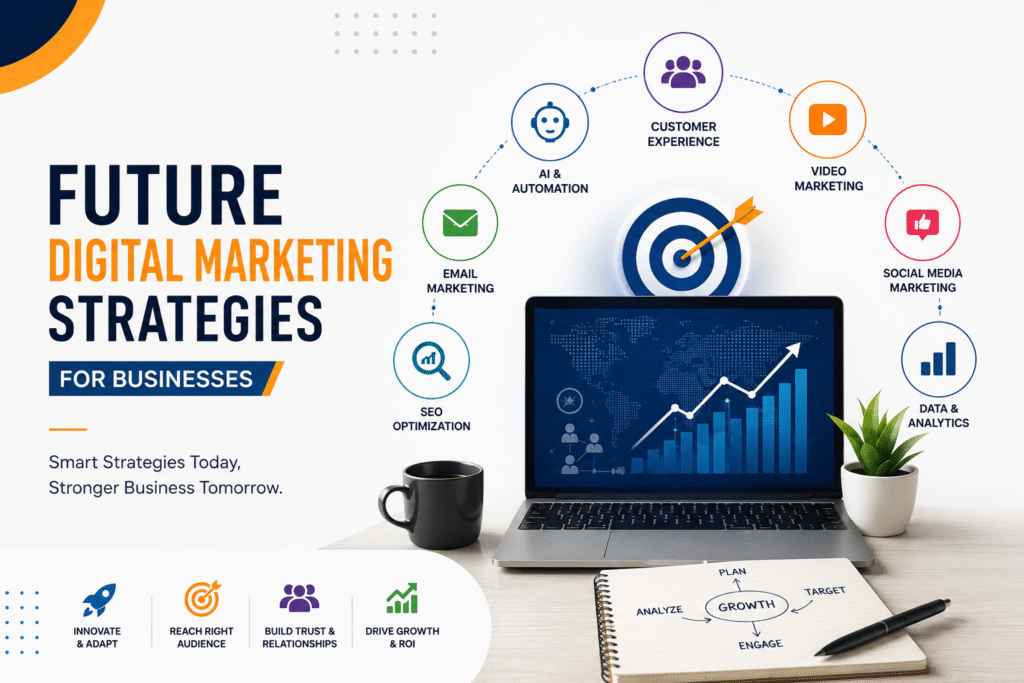
**SEO + Content Marketing + Social Media + Email + Paid Ads + Website + Customer Loyalty**
The exact mix depends on the company and who it wants to reach.
6. Track the Right Things
Businesses should not look at numbers that look good but don’t mean much.
Useful measures can be:
- Leads that are ready to buy
- Sales
- How many people take action
- How much it costs to get a customer
- How much money is made from ads
- How much a customer is worth over time
- How many customers stay
The best measure depends on what the business wants to achieve.
Why Human Connection Still Matters in Digital Marketing?
with all the new technology one thing stays important: **people buy from businesses they trust**.
Technology can make marketing faster and better. Trust can’t be fully made by machines.
Customers want to know:
- Who is running the business?
- Can they trust the company?
- Is the product really helpful?
- Will the company help if something goes wrong?
- Are other people happy?
- Is the business honest about what it says?
Businesses that only care about numbers may miss these questions.
The future of marketing will involve a mix of technology and real people.
AI can look at data. People can feel emotions.
Automated messages can be sent. People can make connections.
Patterns can be found. People can make choices.
Successful companies will use both.
Conclusion
The future of marketing will be shaped by artificial intelligence changing ways people look for things, personal choices, videos, automation, data, privacy and how customers expect things to be.
The main goal of marketing will stay the same: **give the right message to the right people at the right time and offer real value**.
Businesses that want to do in the future should not follow every new tech or marketing trend. Instead they should build basics while being ready to try new ideas.
A ready digital marketing plan should have a good online presence, useful content being easy to find getting involved on social media using AI the right way making choices based on data personalizing and focusing on customer experience.
The biggest chance is not to use tech. It is to use tech to know customers and help them better.
Companies that change with customer needs make helpful content protect customer trust and mix tech with real creativity will be better ready for long-term success.
Digital marketing isn’t going away—it is changing.. For businesses that are ready the future has big chances for growth being seen, connecting with people and being better, than others.