








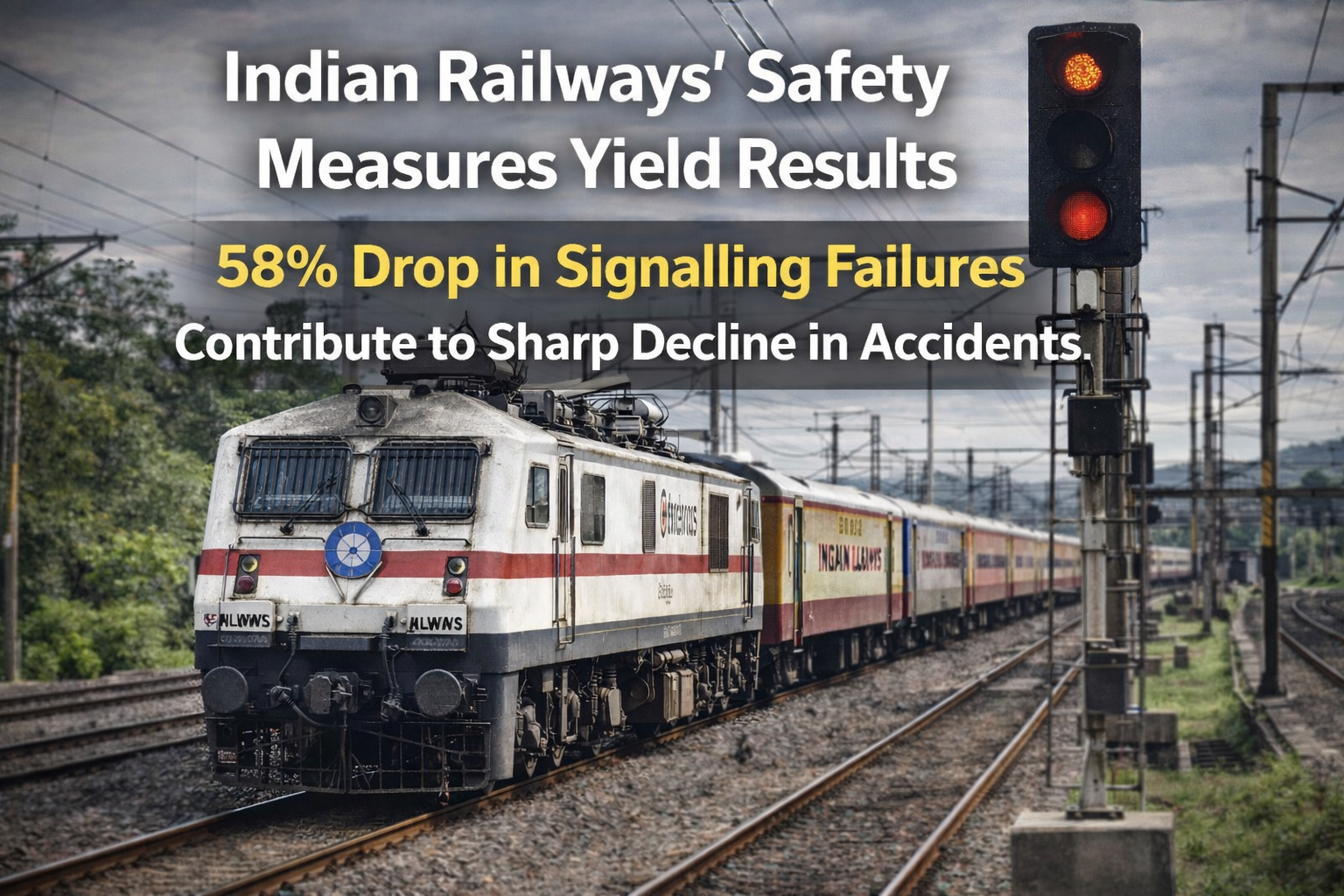
Indian Railways’ continuous focus on strengthening safety infrastructure is delivering visible results. According to recent reports, signalling failures have reduced by 58%, leading to a significant decline in railway accidents across the network.
Signalling systems are vital for safe train movement, as they help regulate traffic and prevent collisions. A major reduction in these failures indicates improved system reliability and better operational control.
Major Safety Initiatives Implemented
To enhance passenger safety, Indian Railways has introduced several key measures, including:
- Modernisation of signalling equipment
- Installation of electronic and automatic signalling systems
- Regular safety audits and preventive maintenance
- Improved training programs for railway staff
These initiatives have helped minimise technical errors and ensured quicker identification and resolution of faults.
Reduction in Railway Accidents
The decline in signalling failures has played a crucial role in reducing derailments and other train-related incidents. Officials state that advanced monitoring systems now allow early detection of issues, preventing accidents before they occur.
This improvement highlights the effectiveness of Indian Railways’ long-term safety reforms.
Building Passenger Confidence
The noticeable fall in accidents has increased passenger confidence in rail travel. With ongoing investments in safety technology and infrastructure upgrades, Indian Railways aims to further improve reliability and operational efficiency.
Conclusion
The 58% drop in signalling failures marks a significant achievement for Indian Railways. As safety measures continue to evolve, the railway network is moving towards a safer and more dependable future for millions of passengers.