






What Happened: A Volcano Awakens After 12,000 Years
On 23 November 2025, the shield volcano Hayli Gubbi — located in the remote Afar region of northern Ethiopia — erupted for the first time in recorded history.
- The eruption sent a massive ash and gas column rising up to 14 km (≈ 9 miles) into the sky.
- Satellite imagery from monitoring agencies confirmed the ash plume drifting west toward the Red Sea, and further across Arabia.
- The region around the tiny village of Afdera — near the volcano — was quickly blanketed in ash, covering roads, vegetation and grazing lands.
Authorities report no immediate human casualties — but the event has already disrupted lives, livelihoods and logistics.
Why This Eruption Matters: Geological & Historical Significance
- Hayli Gubbi is part of the Erta Ale Range, itself within the East African Rift — a tectonically active zone where the African and Arabian plates are pulling apart.
- According to the Smithsonian Institution’s Global Volcanism Program, the volcano had no known eruptions during the Holocene epoch (last ~12,000 years) — making this event historically unprecedented.
- Scientists are calling it a “once-in-millennia awakening.” The eruption underscores how even long-dormant volcanoes can reactivate under shifting tectonic pressures.
On the Ground in Ethiopia: Impact on Communities & Livelihoods
- Villagers near the volcano — especially in Afdera and surrounding Danakil-desert zones — described the eruption as “a sudden bomb,” followed by a massive cloud of ash and shock waves.
- Ash has smothered homes, roads and grazing lands: for pastoral communities that rely on livestock, this threatens fodder supply, endangering animals and livelihoods.
- Tourists and guides in the region — drawn to the unique landscapes of the Danakil Depression — were stranded as ash blanketed the desert and made travel unsafe.
Though no casualties have been reported so far, local officials have warned that the economic and environmental consequences — for people, livestock, and ecosystems — could unfold over coming days and weeks, making the situation critical for ongoing disaster preparedness efforts in the region.
Global & Regional Fallout: From Ash Clouds to Flight Disruptions
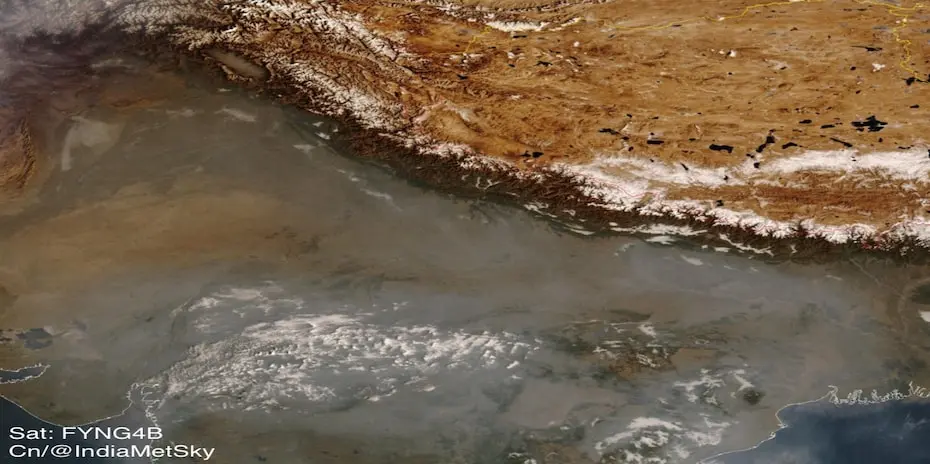
- The ash plume spread across continents — crossing the Red Sea, reaching Yemen and Oman, and even drifting toward South Asia.
- As a precaution, several airlines cancelled or diverted flights over affected airspace, triggering aviation warnings from multiple authorities.
- Countries in the flight path, including parts of India and the Middle East, faced potential risks to air traffic safety — ash particles and volcanic gases can damage aircraft engines and reduce visibility.
The eruption serves as a stark reminder that even remote geological events can have transnational consequences, affecting global travel, regional air quality, and cross-border environmental conditions.
What Scientists & Authorities Are Watching Now
- Experts are carefully monitoring the plume’s movement and dispersion, to assess long-term effects on atmospheric conditions, climate, and air quality. Given the magnitude of ash and sulphur emissions, even remote eruptions like this can influence weather and air composition.
- Local authorities in the Afar region are surveying ash-covered zones to estimate ecological damage — especially impact on grazing lands, water sources, and livestock survival — before relief or support operations begin.
- Global aviation and meteorological agencies have issued alerts, but are also studying the event to refine predictive models for volcanic ash drift and eruption-response strategies.
Key Takeaways: Why This Matters for All of Us
This eruption proves that even volcanoes dormant for thousands of years can suddenly reignite — making geological hazards unpredictable.
- For local communities: It’s a wake-up call about vulnerability — natural disasters don’t need historical precedent to strike. Livelihoods, livestock, and local economy are all at risk.
- For global travel and environment: Volcanic eruptions, even from remote corners of the world, can disrupt air travel, affect air quality thousands of kilometres away, and potentially impact weather patterns.
- For scientists & planners: The event underlines the need for continued monitoring of remote volcanic zones, better disaster preparedness, and transnational coordination when it comes to environmental hazards.