







1. Reducing dependence and diversifying partnerships
For many years, global trade has been heavily influenced by a few major economies and supply chains concentrated in limited regions.
Closer trade ties with the European Union help India:
- diversify trade partners
- reduce reliance on single-country supply chains
- strengthen resilience in critical sectors such as machinery, chemicals, and high-technology inputs
This diversification is strategically important in an era of geopolitical tensions and trade disruptions.
2. Access to one of the world’s largest markets
The European Union represents:
- a massive consumer base
- high-value markets for textiles, leather, gems, engineering goods, and pharmaceuticals
Greater access to EU markets can significantly boost Indian exports and manufacturing, contributing to employment and industrial growth.
3. Integration into global value chains
A major goal of India’s economic policy is to become a global manufacturing hub.
Lower tariffs and improved standards alignment with Europe help Indian firms:
- integrate into international supply chains
- access advanced technology and high-quality components
- improve competitiveness globally
Analysts note this deeper integration could reshape India’s industrial ecosystem over the coming years.
4. Strategic and geopolitical significance
Trade agreements today are not only economic—they are geopolitical tools.
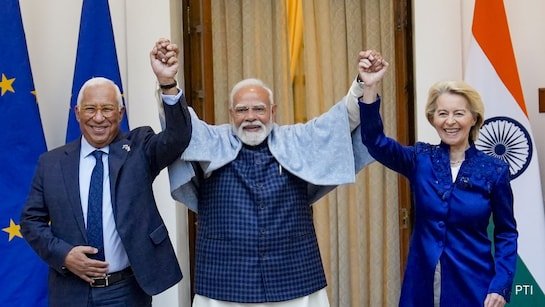
The India-EU partnership:
- strengthens India’s role as a key partner in a multipolar world
- deepens cooperation with democratic economies
- expands collaboration in areas like clean energy, digital technology, and mobility
European leaders increasingly view India as a strategic partner in a changing global order.
5. Investment and technology flows
European companies are among the world’s leaders in:
- engineering and manufacturing
- renewable energy
- automotive and chemicals
Greater market access and regulatory cooperation encourage investment, technology transfer, and joint ventures, which are essential for India’s long-term development.
6. Long-term structural impact
Some experts compare the potential impact of the agreement to major economic milestones because it:
- expands trade across sectors
- promotes manufacturing growth
- supports job creation
- improves productivity and competitiveness
These are structural changes, not short-term gains.
Conclusion
The India-EU trade deal is called a strategic turning point because it goes beyond tariff cuts. It:
- reshapes India’s position in global trade
- strengthens geopolitical partnerships
- boosts manufacturing and exports
- supports long-term economic transformation
In short, it helps India move from being mainly a large market to becoming a stronger global production and trade hub.