







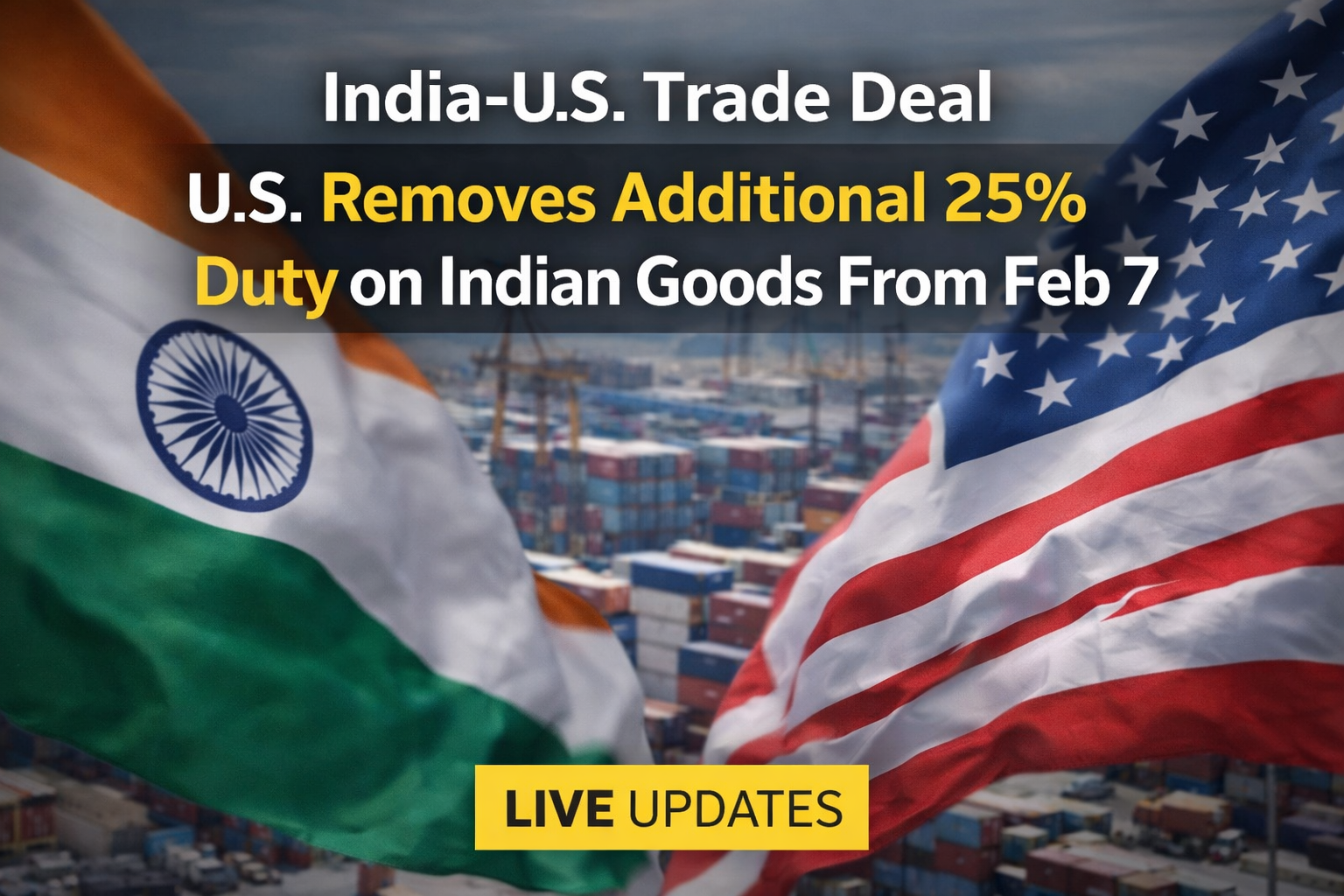
In a major step forward in economic cooperation, the United States is set to remove the additional 25% duty on Indian goods from February 7, 2026, as part of an interim India-U.S. trade deal framework. This move comes after months of negotiations and reflects warming trade ties between the world’s two largest democracies.
The additional tariff was initially imposed in August last year as a punitive measure tied to India’s purchase of Russian crude oil. Under the new executive order signed by U.S. President Donald Trump, this penalty tariff will not apply to goods entered into the United States from February 7 onward, easing a significant burden on Indian exporters.
Why the Tariff Was Removed
According to the White House statement, the rollback follows India’s commitment to stop directly or indirectly importing Russian oil—a key demand of the U.S. in recent diplomatic engagements. In return, India has also entered a broader framework with the U.S. that includes expanded defence cooperation and increased purchases of American energy products over the next decade.
This tariff action is part of a wider interim agreement that also aims to reduce overall trade barriers and move toward a more balanced Bilateral Trade Agreement. Both countries reaffirmed their intention to expand market access and facilitate reciprocal trade benefits.
Impact on Indian Exports
The removal of the 25% surcharge is expected to boost Indian exports, especially in sectors that were heavily affected when duties effectively doubled on U.S. entry. With this punitive tariff lifted, Indian textiles, machinery parts, pharmaceuticals, gemstones, and other key products could regain competitiveness in one of the world’s largest consumer markets.
However, the executive order includes a warning clause: if India resumes importing Russian oil directly or indirectly, the U.S. could reimpose the duty. This conditionality underscores the temporary and strategic nature of the tariff rollback.
What Comes Next
Beyond tariff adjustments, India and the U.S. are expected to continue negotiations toward a comprehensive trade agreement, addressing other areas such as digital trade, non-tariff barriers, and regulatory cooperation. Experts say the interim framework lays the groundwork for deeper economic integration and expanded business opportunities for industries in both countries.
As India prepares to realign some of its energy import strategy and strengthen defence and economic ties with the U.S., businesses and trade analysts will be watching closely to see how this temporary reprieve translates into long-term trade and investment flows.