





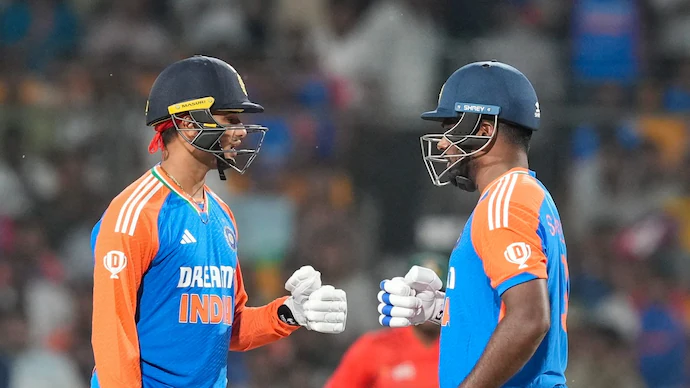
The 2025-26 edition of the Syed Mushtaq Ali Trophy (SMAT) has thrown up an unexpected twist: two of India’s prominent T20I batters, Sanju Samson and Abhishek Sharma — both expected to shine — had forgettable outings in the second round, as their teams, Kerala Cricket Team and Punjab Cricket Team respectively, faltered.
What does this mean for the players, their teams, and their T20I ambitions? Here’s the breakdown.
Second-Round Disaster: What Went Wrong
Sanju Samson: A Down-Day for Kerala
- In the match against Railways Cricket Team, Samson managed just 19 runs off 25 balls. His knock came as Kerala attempted a chase of 149 — a modest target, but a chase that eventually ended in a 32-run loss.
- The defeat was a sharp contrast from Kerala’s opening fixture, where Samson had played a steady hand, scoring 51 off 41 balls* in a comfortable 10-wicket win over Odisha.
- The inconsistency — from a confident 50-plus start to a meek 19 — raises questions about his form and whether he can anchor the innings reliably under pressure.
Abhishek Sharma: Punjab’s Hopes Crash
- Representing Punjab, Abhishek Sharma was expected to lead the chase against Haryana Cricket Team. However, he was dismissed cheaply for just 6 runs (five balls).
- It wasn’t the first miss: this marked a second consecutive low score in SMAT, following his failure in the opening match against Himachal Pradesh.
- With Punjab chasing a challenging 208, Sharma’s early dismissal derailed the game, and despite a mid-order fight, Punjab couldn’t seal the deal — even the Super Over went against them.
Bigger Picture: Why This Failure Matters
For Their SMAT Teams (Kerala & Punjab)
- For Kerala, Samson’s failure meant the otherwise promising batting — once built on a strong opening — lost momentum. Railways’ competitive total and Kerala’s shaky chase exposed a fragile middle order.
- For Punjab, expectation was heavy on Abhishek — as their spearhead. His failure heightened pressure on the rest of the batting line-up. Ultimately, Punjab’s hopes for a dominant campaign hit a roadblock.
For Their T20I & Future Prospects
- Both Samson and Abhishek are integral to India’s T20I setup. A good domestic showing in SMAT often strengthens their case for national selection; but repeated flops may cast doubts — especially if contenders perform consistently.
- SMAT has historically been a platform for players to stake claims for higher honours; turning up under pressure matters. Their inability to deliver at home draws attention to questions around form, temperament, and reliability.
Context Matters: But So Do Expectations
To be fair, both players did not enter SMAT 2025 on identical footing:
- Just days before, Samson and his Kerala side set a record opening partnership of 177 runs against Odisha — with Samson unbeaten on 51 and his opening partner firing a ton.
- That performance had raised hopes that Samson could carry that confidence forward into next games.
- For Abhishek Sharma, SMAT 2025 had already begun on shaky notes: his first match ended in disappointment, making this second failure part of a worrying pattern.
This contrast — promise followed by collapse — magnifies the disappointment.
What’s Next: Course Correction & Pressure
For Sanju Samson
- Need for consistency: rather than sporadic 50s, stakeholders (team and selectors) will now look for sustained form — especially in tough chases and under pressure.
- Leadership Pressure: As a senior and often-captain in domestic — his batting form influences not just his fate, but the team’s.
For Abhishek Sharma
- Rebuilding confidence: As an aggressive opener, rhythm and timing matter. He needs a few high-impact innings to silence critics of inconsistency.
- Competition: With many talented batters performing in domestic circuit and upcoming IPLs, his spot isn’t guaranteed — underperformance may give others chance.
Lessons from SMAT: Domestic Cricket Remains the True Test
- Domestic tournaments like SMAT continue to highlight the unforgiving nature of competitive cricket — even stars can falter.
- Performance pressure in domestic circuits reflects high stakes: good innings can revive careers; bad ones raise doubts.
- For national selectors, SMAT remains a key barometer — current form, temperament under pressure, and consistency across matches matter.
For fans and lovers of Indian cricket, this serves as a reminder: T20I status doesn’t ensure domestic dominance. Every match, score, and failure counts.
Final Thoughts
The second round of SMAT 2025-26 delivered a sobering dose of reality for two of India’s promising T20 stars. While initial optimism about stellar performances was high, both Samson and Abhishek struggled under pressure — with Kerala and Punjab paying the price.
This failure isn’t necessarily the end of their journey. But it does signal a wake-up call: domestic cricket demands consistency, resilience, and adaptability. If they wish to maintain their shining spots in the national setup, they must bounce back quickly — with runs, resolve, and mental strength.
For now, SMAT fans and selectors will watch closely: will this flop become a temporary setback or the start of a worrying decline? Only their next performances will answer.