





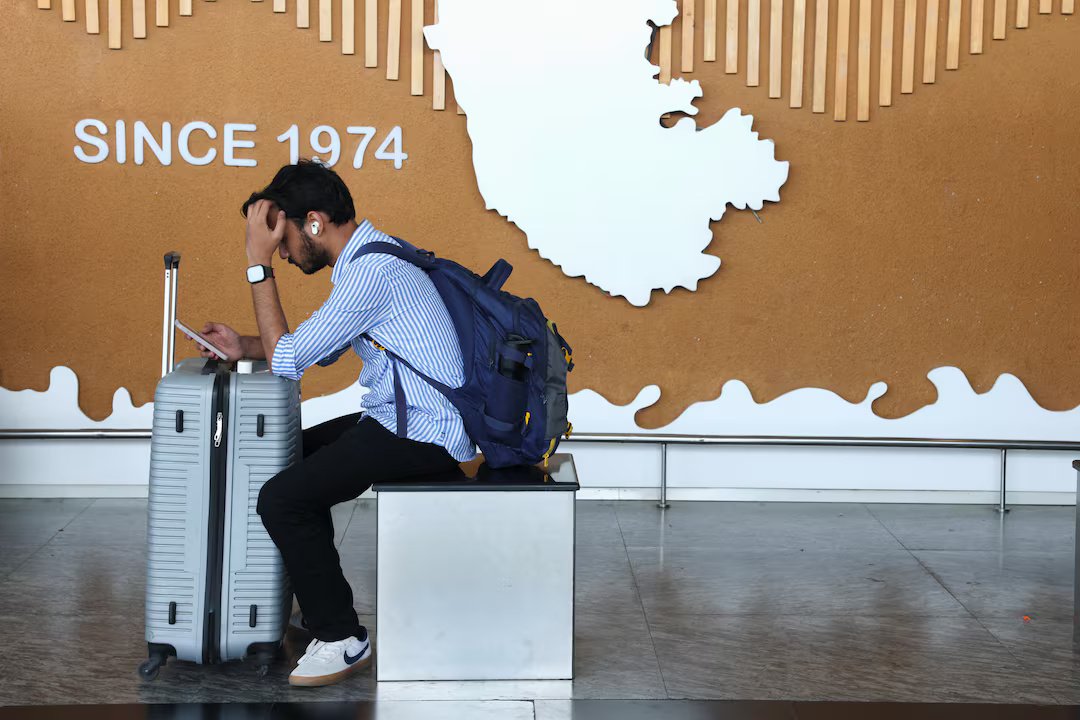
India’s aviation sector is facing one of its most turbulent weeks of the year as the IndiGo crisis enters its fifth consecutive day, leaving hundreds of passengers stranded, flights cancelled, and schedules severely disrupted. The situation escalated to a national concern, prompting the government to step in and impose temporary airfare caps to prevent airlines from exploiting the surge in demand.
The move comes amid widespread frustration, long queues at airports, and thousands of travellers scrambling to find alternative connections. As the crisis unfolds, questions about operational resilience, staff management, and passenger safety have taken centre stage—making this one of the most significant aviation developments of the year.
What triggered the IndiGo crisis?
IndiGo, India’s largest airline by market share, has been grappling with a major operational breakdown linked to mass crew unavailability, technical disruptions, and cascading delays across its network. While the airline has not publicly disclosed the full scale of the issue, industry insiders point to multiple factors:
1. Crew shortages
Unexpected sick leaves, rostering glitches, and staffing mismanagement reportedly contributed to the sudden collapse of flight operations.
2. Technical issues
Aircraft grounded for maintenance or technical checks further reduced available capacity.
3. High operational load
With IndiGo handling a significant portion of domestic traffic, even a slight disruption triggers nationwide ripple effects.
4. Inefficient crisis response
Delayed communication and inadequate rebooking support led to passenger distress, compounding frustration at airports.
By the fifth day, major hubs like Delhi, Mumbai, Bengaluru, and Hyderabad saw repeated cancellations and long delays, forcing the government to intervene.
Government caps airfares to control surge pricing
Amid soaring ticket prices and growing complaints from stranded passengers, the Ministry of Civil Aviation introduced temporary fare caps on select high-demand routes.
These caps are aimed at preventing price gouging and ensuring that last-minute travellers are not forced to pay exorbitant fares due to reduced capacity.
Why airfare caps were necessary
Uncontrolled price spikes
With IndiGo cancelling multiple flights, other airlines saw a dramatic increase in demand. In some cases, last-minute fares surged exponentially, crossing levels considered unreasonable by aviation norms.
Passenger protection
The government’s primary objective is to safeguard passengers from financial exploitation during a crisis. Fare caps ensure that ticket prices remain within a pre-defined band across all airlines.
Market stability
A temporary cap helps stabilize the market ecosystem and prevents unfair competition, especially in a scenario where a dominant airline is struggling.
These fare caps will remain in effect until normalcy is restored in the aviation sector.
Impact on passengers: chaos, uncertainty, and rising frustration
For travellers across India, the situation has been nothing short of chaotic. Over the last five days, passengers have faced:
Long waiting hours
Airport terminals have been crowded with passengers waiting for delayed or rescheduled flights.
Difficulty finding alternatives
With reduced IndiGo operations, available seats on other airlines have become scarce, worsening the travel scramble.
Increased personal expenses
Many passengers have had to spend extra on food, hotels, and last-minute travel changes.
Poor communication
Passengers reported receiving delayed updates through SMS and email, with many learning about cancellations only after arriving at the airport.
Despite IndiGo deploying additional support teams, the scale of disruption has made it difficult to provide timely assistance.
How India’s airfare caps will affect the aviation sector
The imposition of fare caps during the IndiGo crisis marks a significant regulatory intervention in India’s aviation market. Experts believe this step will have both short-term and long-term implications.
Short-term impact
Stabilized pricing
Passengers can expect more predictable fares on major routes.
Reduced exploitation
Airlines cannot inflate prices, ensuring fairness during the disrupted period.
Pressure on airlines
Other airlines may face operational pressure due to capped fares and rising demand.
Long-term impact
Higher regulatory scrutiny
The crisis may push the government to closely monitor airline operations, staffing, and consumer treatment.
Strengthening passenger rights
Calls for stronger policies, including compensation for excessive delays, may gain momentum.
Improved crisis preparedness
Airlines may be required to develop clearer contingency plans for large-scale disruptions.
IndiGo’s response and recovery efforts
IndiGo has issued multiple statements acknowledging the disruptions and apologizing for passenger inconvenience. The airline claims it is working to restore normal operations as quickly as possible. Key actions include:
Adding reserve crew
To compensate for staff shortages, IndiGo has initiated emergency rostering.
Reassigning aircraft
Available aircraft are being shifted to high-demand routes to reduce cancellations.
Prioritizing stranded passengers
Affected passengers are being offered rebooking, refunds, and assistance, though the crowd has made execution challenging.
Strengthening communication
The airline says it is improving real-time updates through its app, SMS alerts, and customer service channels.
Despite these measures, experts estimate it may take several more days before full flight schedules return to normal.
Aviation experts call for structural reforms
The IndiGo crisis has triggered a broader debate on the structural weaknesses of India’s aviation industry. Experts highlight the need for deeper reforms to avoid similar disruptions in the future.
1. Better workforce planning
Airlines must improve crew rostering, reduce fatigue, and maintain adequate reserve staff.
2. Crisis management protocols
Mandatory guidelines for managing large-scale disruptions may help standardize responses across airlines.
3. Transparent passenger compensation
India’s passenger rights framework could be strengthened to ensure timely refunds, accommodations, and compensation.
4. Infrastructure upgrades
Airports need better infrastructure to handle sudden surges in crowding and queues.
5. Balanced market dependence
India’s heavy reliance on a single dominant airline exposes the system to operational risks when disruptions occur.
What travellers should do during such crises
Passengers navigating this situation can take certain steps to reduce inconvenience:
Check flight status frequently
Monitor airlines’ apps and websites for updates.
Avoid peak hours
Crowded terminals can slow down assistance and rebooking services.
Keep all documents and receipts
These are important for refunds or compensation claims.
Plan alternate routes
If stuck, explore nearby airports or connecting routes with available seats.
Contact customer support early
Early communication can help secure faster rebooking options.
Conclusion: A defining moment for India’s aviation sector
The decision to cap airfares amid the IndiGo crisis, which has stranded passengers for the fifth day, reflects the government’s commitment to maintaining fairness and stability in the aviation system. The crisis has exposed gaps in workforce management, crisis preparedness, and market dependence—issues that policymakers and airlines must address urgently.
For now, passengers can expect more stable pricing thanks to the fare caps, even as IndiGo works to restore normal operations. In the long run, this episode may push the aviation sector toward greater transparency, improved service standards, and stronger protection for passengers—marking a significant moment in India’s aviation journey.