







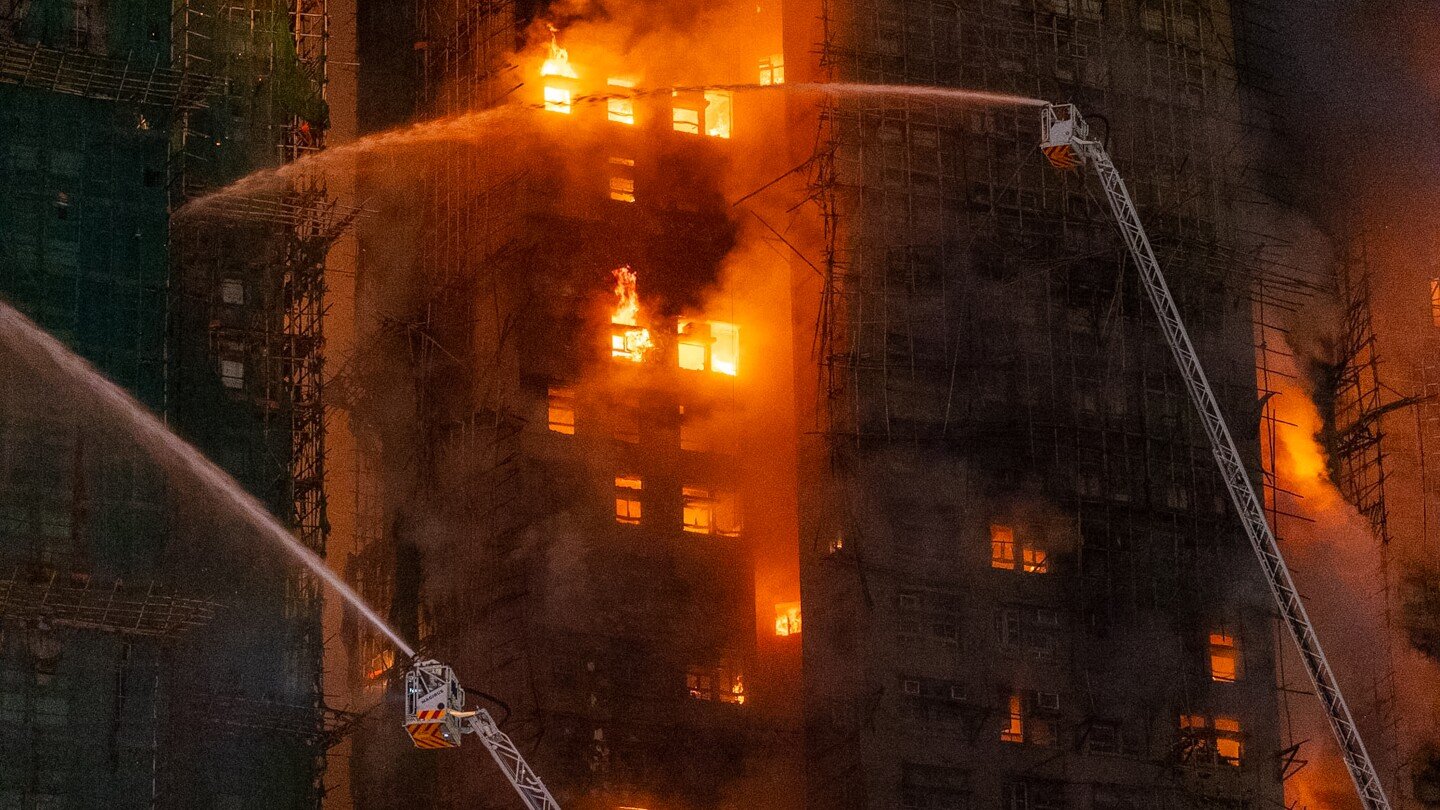
On 26 November 2025, a massive blaze erupted at the Wang Fuk Court residential complex in Tai Po district, Hong Kong. The fire — which began in external bamboo scaffolding used for renovations — quickly engulfed seven of the estate’s eight towers. Over 4,800 residents lived in the complex.
As of the latest official counts:
- 44 people confirmed dead, including a firefighter.
- At least 279 people remain missing, with hundreds more evacuated to temporary shelters.
- Rescue efforts are still ongoing amid hazardous conditions — high heat, smoke, falling debris and unstable scaffolding complicate access to upper floors.
Videos circulating online show horrifying scenes: flames engulfing entire floors, smoke pouring from windows, and neighbouring towers nearly catching fire.
What Went Wrong: Possible Causes & Construction Hazards
Early investigations suggest the fire spread unusually fast due to a combination of factors associated with ongoing renovation work and materials used. Key concerns include:
- The complex was covered in bamboo scaffolding and plastic construction netting — materials that are flammable and can allow fire to climb rapidly up high-rise façades.
- Use of Styrofoam and other foam-sealants around windows and elevator lobbies may have accelerated internal fire spread.
- Strong winds and dry weather conditions likely helped flames jump from building to building, making containment difficult.
Local authorities believe the blaze was not merely accidental — they have arrested three individuals (two company directors and an engineering consultant) from the renovation firm on suspicion of manslaughter due to gross negligence.
Human Cost & Response Efforts
The human toll has been staggering. Many of the missing are believed to be elderly residents who may have been unable to evacuate quickly. Witnesses described chaotic scenes: terrified occupants rushing to safety, neighbours aiding each other, and firefighters risking their lives amid crumbling scaffolding and debris.
Emergency crews — including nearly 800 firefighters, dozens of fire trucks and ambulances — worked into the night. Several buildings were reportedly brought under control by Thursday morning, but parts of the estate remain dangerous, with rescue teams still unable to access upper floors.
Local government has opened temporary shelters for the displaced — more than 900 residents were relocated.
In response to the tragedy, public anger is rising over building safety standards, renovation oversight, and the continued use of hazardous materials — especially bamboo scaffolding and flammable nets on high-rise buildings. Many are calling for stricter enforcement and a complete ban on such potentially dangerous renovation practices.
What’s Next: Investigation, Safety Reform & Lessons
- A specialised task force comprising police and fire authorities is now investigating the cause of the fire, including whether renovation materials violated fire-resistance standards.
- Officials may consider banning or phasing out bamboo scaffolding and non-fire-resistant exterior materials, pushing for safer alternatives in all high-rise construction and renovation projects.
- The tragedy is likely to fuel public debate over housing safety, oversight, and urban living conditions in Hong Kong — especially for older estates undergoing renovations.
What We All Should Take Away
This devastating fire is a harsh reminder of how under-regulated renovation practices and cheap construction materials can endanger lives — especially in densely populated cities with many high-rise towers. It underscores the urgent need for stringent fire-safety standards, regular inspections, and transparency in urban housing projects.
Final Thought
As news continues to unfold, it’s crucial for global civic communities, housing societies, and city planners to view this not just as a local tragedy, but as a cautionary tale. Ensuring safe building standards and responsible renovation practices should be a top priority — everywhere.