









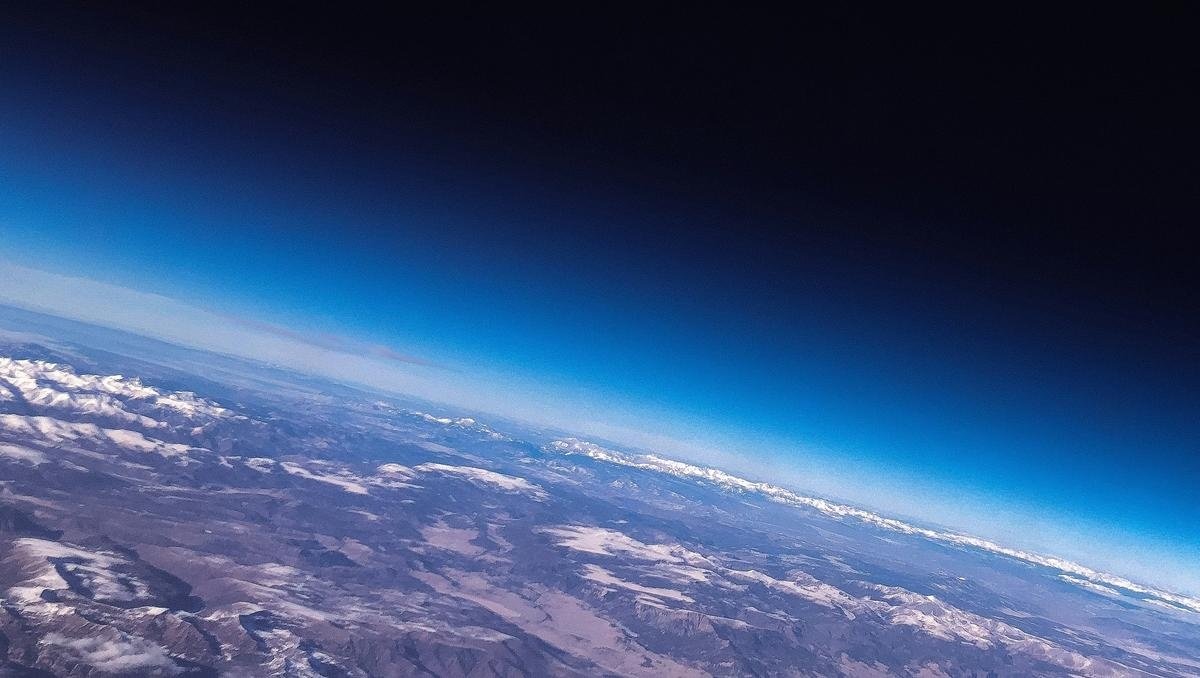
Earth is surrounded by a thick layer of gases that makes life possible. This protective blanket, known as the atmosphere, provides oxygen to breathe, shields us from harmful radiation, and regulates temperature. But an interesting question arises: Why doesn’t the atmosphere drift away into space?
The answer lies in a combination of gravity, temperature, and Earth’s magnetic protection.
Gravity: The Main Reason the Atmosphere Stays
The primary reason Earth’s atmosphere remains intact is gravity.
Gravity pulls gases toward the planet’s surface, holding them close and preventing them from escaping easily into space. The stronger a planet’s gravity, the better it can retain its atmosphere.
Earth’s gravity is strong enough to hold essential gases like nitrogen and oxygen, which make up most of the air we breathe.
Escape Velocity and Gas Movement
For any gas molecule to leave Earth permanently, it must reach escape velocity, which is about 11.2 kilometers per second.
Most air molecules move far slower than this speed, so they remain trapped by gravity. Only a tiny fraction of very light gases, such as hydrogen and helium, can occasionally escape into space over long periods.
This is why Earth’s atmosphere contains very little hydrogen compared to larger planets like Jupiter.
The Role of Temperature
Temperature also affects whether gases escape into space.
Hotter gases move faster. If Earth were much hotter, atmospheric gases would move more rapidly and escape more easily. Fortunately, Earth’s moderate temperature helps keep most gases moving slowly enough to remain bound by gravity.
This is one reason why smaller and hotter planets, such as Mercury, have little or no atmosphere.
Earth’s Magnetic Field: An Invisible ShieldAnother important factor is Earth’s magnetic field.
The Sun constantly emits charged particles known as the solar wind. Without protection, this wind could gradually strip away the atmosphere, as scientists believe happened on Mars.
Earth’s magnetic field deflects most of these charged particles, preventing large-scale atmospheric loss and protecting life on the surface.
Why Mars Lost Much of Its Atmosphere
Mars provides a useful comparison.
- Mars has weaker gravity than Earth.
- Its magnetic field largely disappeared billions of years ago.
- Solar wind gradually stripped away much of its atmosphere.
As a result, Mars today has a thin atmosphere and cannot retain heat effectively, making it cold and dry.
The Balance That Makes Life Possible
Earth’s atmosphere remains stable because of a delicate balance:
- Strong enough gravity to hold gases
- Moderate temperatures preventing rapid gas escape
- A magnetic field that shields against solar wind
- Continuous recycling of gases through natural processes like volcanoes, oceans, and plant life
These factors together help maintain the atmosphere over billions of years.
Conclusion
Earth’s atmosphere is not blown away into space because gravity holds it in place, temperatures remain moderate, and the planet’s magnetic field protects it from solar wind. This combination of factors creates a stable environment that allows life to thrive.
Understanding how Earth preserves its atmosphere also helps scientists study other planets and search for worlds that may support life.